

Buying a house is exciting, but once you start looking into the money for Home Loan side of it, things can get confusing pretty quickly.
At first, you may only think about the price of the house. Then someone mentions a home loan, and suddenly there are new words everywhere—EMI, down payment, interest rate, loan tenure, processing fee, credit score and so on.
If you are buying your first home, you might have questions like: How much should I borrow? How much money should I keep as savings? Will I be able to manage the EMI every month? What happens if the interest rate changes?
These are all reasonable questions.
The easiest way to understand a home loan is not to look at everything together. I prefer breaking it into smaller parts. Once the basic terms become clear, the whole process feels much less complicated.
A home loan is also a long-term financial commitment, so it is better to understand the numbers properly before making a decision.
What Is a Home Loan?

A home loan is money borrowed from a bank or another eligible lender to help you purchase a property.
You normally pay some amount from your own savings and borrow the remaining amount, depending on your eligibility and the lender’s conditions. You then repay the borrowed money over a certain period, along with interest.
For example, suppose you find a house that costs ₹40 lakh. You have some savings, but you do not have the entire amount available. A home loan can help you finance part of the purchase.
However, the lender will not decide the loan amount only by looking at the price of the house.
Your income, existing loans, credit history, repayment ability and property details can all be considered.
This is why two people buying similar houses may qualify for different loan amounts.
So instead of thinking, “The bank will give me this much,” it makes more sense to first understand what you can actually manage.
How Does a Home Loan Work?
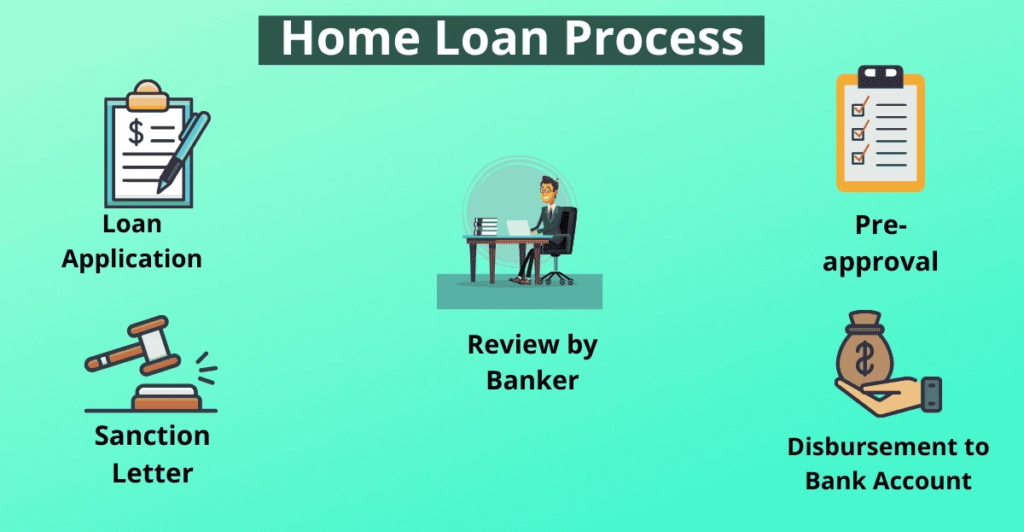
The basic process is easier than it sounds.
First, you choose a property and check its price. Then you look at your savings and decide how much you can put towards the purchase yourself.
After that, you can approach different lenders and check your eligibility.
The lender may ask about things such as:
- Your income
- Existing loans and EMIs
- Credit history
- Employment or business details
- Property documents
- Repayment capacity
If your application is approved, the loan is processed according to the lender’s terms.
After that comes the part that lasts for years—the EMI.
Your monthly EMI generally goes towards both the principal amount and the interest. The principal is the money you borrowed, while the interest is the cost of borrowing it.
One thing that is easy to miss is that a low EMI does not necessarily mean a cheap loan.
You should also check how much money you will repay altogether by the time the loan ends.
What Is a Down Payment?
A down payment is the amount you pay from your own pocket when purchasing the property.
The remaining amount may be financed through a home loan, depending on the lender and your eligibility.
For instance, if a house costs ₹40 lakh and you have ₹10 lakh available, you may use part of that money towards the purchase and arrange financing for the remaining amount.
A bigger down payment means borrowing less, which can reduce your loan burden.
But I would be careful about putting all your savings into the house.
This is one of those things that can look good on paper but feel very different later. After buying a house, you may still need money for registration, moving, furniture, appliances, repairs or some unexpected expense.
Imagine using almost all your savings for the down payment and then having to borrow money again when something unexpected happens.
Keeping some money aside can make a big difference.
What Is an EMI?

EMI means Equated Monthly Instalment.
It is the regular payment you make towards your home loan. The EMI generally includes both principal and interest.
The amount you pay can depend on:
- Loan amount
- Interest rate
- Loan tenure
- Type of interest rate
- Repayment terms
A larger loan will usually mean a larger repayment obligation. The interest rate and length of the loan also affect the EMI.
When looking at an EMI, I would not stop at the question, “Can I pay this amount this month?”
Think a little further.
What if your household expenses increase? What if you have another major expense a few years from now? What if your income changes?
A home loan should leave enough room in your monthly budget for normal life as well.
How Does the Interest Rate Affect a Home Loan?
The interest rate is one of the numbers you should pay close attention to when comparing home loans.
You are borrowing a large amount of money, often for many years, so even a small difference in the rate can affect the total amount you eventually pay.
Home loans can have different interest-rate structures.
With a fixed-rate arrangement, the rate remains fixed according to the terms of the loan. With a floating-rate loan, the rate can change depending on the applicable benchmark and the lender’s terms.
The exact conditions can differ between lenders.
That is why I would not choose a loan just because its advertisement shows a low interest rate.
Read the actual offer.
Check whether the rate can change, what can cause that change, and whether it could affect your EMI or repayment period.
What Is Loan Tenure?
Loan tenure is simply the amount of time you have to repay the home loan.
You may choose a shorter or longer repayment period depending on your financial situation.
A longer tenure usually means the repayment is spread over more months. This can make the monthly EMI easier to handle.
But there is another side to it.
You may pay interest for more years, which can increase the overall cost of the loan.
A shorter tenure may mean a higher EMI, but the total interest cost can be lower if the other loan terms are comparable.
So I would not automatically pick the longest tenure just because the EMI looks comfortable.
At the same time, choosing a very short tenure that makes every month’s budget stressful is not necessarily a smart decision either.
The aim should be to find a repayment period that you can manage without putting your everyday finances under unnecessary pressure.
Why Is Your Credit Score Important?
Your credit history can matter when you apply for a home loan.
Lenders may check your credit profile while assessing your application and deciding the terms they can offer.
A good credit history generally shows that you have handled previous borrowing responsibly.
Before applying for a home loan, checking your credit report can be a useful step.
You may find an old account, incorrect information or another detail that needs attention. It is better to discover such things before submitting a major loan application.
I would also avoid taking unnecessary new loans or missing existing payments while preparing for a home purchase.
Your credit score is not the only thing a lender looks at, but it is certainly worth keeping in mind.
How Much Home Loan Can You Afford?

This is where I think first-time buyers need to slow down a little.
A bank may tell you that you are eligible for a certain amount. That does not automatically mean you should borrow the entire amount.
There is a difference between qualifying for a loan and being comfortable with the loan.
Suppose the bank says you can borrow ₹50 lakh. Before getting excited about a bigger house, look at your own monthly budget.
Think about:
- Monthly income
- Existing EMIs
- Household expenses
- Insurance
- Regular savings
- Emergency savings
- Future family expenses
- Property-related costs
- Possible changes in income
After adding everything together, the amount you can comfortably repay may be quite different from the amount the bank is willing to lend.
Personally, I would rather have a slightly smaller house and some financial breathing room than a very expensive house that makes me worry about money every month.
The house is important, but being able to live comfortably after buying it is important too.
Documents Usually Needed for a Home Loan

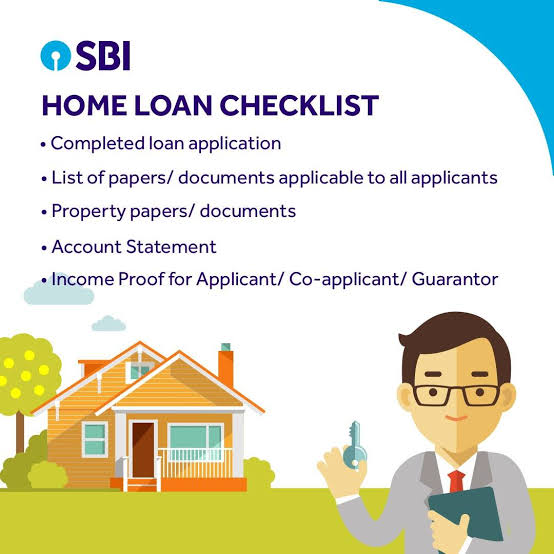

The paperwork depends on the lender and your individual situation.
Generally, lenders need documents that help verify your identity, income, financial position and the property.
You may be asked for things such as:
- Identity and address proof
- Income documents
- Bank statements
- Employment or business details
- Property documents
- Photographs
- KYC documents
The requirements can be different for salaried and self-employed applicants.
One small step that can save time is asking the lender for the latest document checklist before beginning the application.
It is much easier to collect everything beforehand than to keep searching for missing documents in the middle of the process.
Other Costs You Should Remember
When people talk about buying a house, they often focus on two numbers—the property price and the EMI.
But there are other expenses too.
Depending on the property and transaction, you may have to consider:
- Stamp duty
- Registration-related charges
- Processing fees
- Legal or documentation expenses
- Insurance
- Other applicable charges
And the spending does not necessarily stop once you receive the keys.
A new house may need furniture, appliances, curtains, painting, repairs or other small changes.
Even small purchases can start adding up when you are setting up an entire home.
So I would keep some money aside instead of using every bit of available savings for the initial purchase.
Having an emergency cushion can make those first few months much less stressful.
How to Compare Home Loans

When comparing home loans, looking at the interest rate is a good starting point, but it should not be the only thing you check.
A loan with a slightly lower advertised rate may not necessarily be the better option once you look at the complete terms.
I would compare:
- Interest rate
- EMI
- Loan tenure
- Processing fee
- Other applicable charges
- Prepayment or foreclosure conditions
- Interest-rate structure
- Eligibility requirements
- Important terms and conditions
- Customer service
Also check the total repayment amount.
A difference of a few hundred rupees in the monthly EMI may not sound like much. But when you multiply the difference across many years, the overall amount can become significant.
And if you find a term in the agreement that you do not understand, ask about it.
There is nothing embarrassing about asking a basic question when you are taking a loan that could last for years.
Should You Take a Long-Term Home Loan?
A longer home loan tenure can make the monthly payment easier because the amount is spread across more months.
This can be helpful when your income does not leave much room for a very high EMI.
But the longer the repayment period, the longer you may be paying interest.
So there is a trade-off.
You may have a lower monthly EMI, but the total amount paid over the life of the loan can be higher.
If you can comfortably manage a higher EMI, a shorter tenure may reduce the total interest cost.
There is no fixed answer that works for everyone.
I would look at both the monthly payment and the total repayment before deciding.
Fixed vs Floating Interest Rates
Fixed and floating interest rates can sound confusing when you first come across them.
A fixed interest rate remains fixed according to the terms of the loan arrangement.
A floating interest rate can change based on the applicable benchmark and the lender’s terms.
If a floating rate changes, it can affect the cost of the loan. Depending on the lender’s repayment structure, the change may affect the EMI, the tenure, or both.
Before choosing one, I would want to know exactly how the lender handles rate changes.
Do not select a fixed or floating rate simply because one sounds safer or cheaper.
Look at the actual terms and understand what you are agreeing to.
Things I Would Check Before Taking a Home Loan

If I were preparing to take a home loan, I would first sit down with a calculator and my monthly budget.
I would work out the property price, my available savings and the amount I actually need to borrow.
Then I would leave some money aside for emergencies instead of using everything for the down payment.
I would also compare different lenders. I would look at the interest rate, EMI, total repayment, processing fee and other charges rather than focusing on just one number.
The interest-rate structure would be another thing I would check carefully.
Most importantly, I would give myself some time before signing anything.
When you find a house you really like, it is easy to think, “I do not want to lose this property.”
That feeling can make people rush.
But the house may be yours for many years, and the loan will affect your finances for many years too. Taking an extra day or two to understand the numbers is much better than regretting a rushed decision later.
Common Mistakes First-Time Home Buyers Should Avoid
Buying your first home can be emotional. You may already be imagining your life there before you have even finalised the loan.
That excitement is completely understandable, but it can sometimes make people overlook practical things.
One common mistake is borrowing the maximum amount the bank offers.
Another is using nearly all available savings for the down payment.
Some buyers compare only interest rates and forget about processing fees, other charges and repayment conditions.
Not reading the loan documents carefully can create problems later too.
I would also be careful about taking financial advice from friends, relatives or salespeople without checking the details yourself.
Their financial situation may be completely different from yours.
A loan that feels comfortable for one family could be difficult for another.
Your income, expenses, existing debt, savings and future plans all matter.
A Simple Home Loan Checklist for First-Time Buyers

Before applying, I would keep a small checklist ready:
- What is the actual price of the property?
- How much can I pay from my savings?
- How much do I really need to borrow?
- Can I manage the EMI every month?
- What is the total repayment amount?
- What type of interest rate does the loan have?
- Can the rate change?
- What fees and other charges will I have to pay?
- What documents are required?
- Have I compared different lenders?
- Will I still have emergency savings after buying the property?
- Have I understood the important loan conditions?
These questions may look simple, but they can help you see the bigger picture before making a major financial decision.
Final Thoughts
Taking a home loan for the first time can feel like a lot to handle. There are so many numbers and terms that it is easy to get confused, especially when you are already thinking about the house itself.
I think the easiest way is to take it step by step. First understand how much you can arrange yourself, then look at the amount you actually need to borrow. After that, check the EMI, interest rate and loan period properly. Once these things are clear, the decision does not feel quite as confusing.
One thing I would definitely keep in mind is that just because a bank says you are eligible for a certain amount does not mean you need to take the full amount. Your monthly expenses and future plans matter too.
There will also be expenses apart from the EMI. Registration, fees, furniture, repairs and other small things can require more money than you expect. So, keeping some savings aside can be helpful instead of putting everything into the house.
I would also take some time to compare different loan options before making the final choice. If any term or charge is not clear, ask about it. It is much better to ask a simple question now than realise later that you misunderstood something important.
You do not have to know everything about home loans from the beginning. Start with the basics, look at your own finances honestly, and choose a loan that you can manage without